Contents
Cirrus Link Resources
Cirrus Link Website
Contact Us (Sales/Support)
Forum
Cirrus Link Modules Docs for Ignition 7.9.x
Inductive Resources
Ignition User Manual
Knowledge Base Articles
Inductive University
Forum
Cirrus Link Website
Contact Us (Sales/Support)
Forum
Cirrus Link Modules Docs for Ignition 7.9.x
Ignition User Manual
Knowledge Base Articles
Inductive University
Forum
A Cirrus Link Sparkplug message comprises two parts: the topic and the payload.
The topic is published in the format:
Payload in the format:
When configured to create Default Tags, MQTT Engine will parse the topic and payload to create tags under the 'Edge Nodes' folder in the MQTT Engine tag provider.
The metric name in the payload is used for the tag name prefixed by the Sparkplug Descriptors from the message topic resulting in a tag path of:
For example the message below:
creates an MQTT Engine tag:
When configured to create UNS Tags, MQTT Engine will obfuscate the Sparkplug Descriptors used in the topic and only parse the metric name included in the payload to create the tag structure under the configured UNS Folder prefix.
For example the message below:
creates an MQTT Engine tag:
A requirement of a UNS is that each tag can only be referenced from a single source ie. the same tag path cannot be published from two edge nodes.
In order to identify the source for the tag, the Sparkplug Descriptors in the topic are used to create three custom tag properties which identify the Sparkplug Descriptor associated with this tag: SparkplugGroupId, SparkplugEdgeNodeId and SparkplugDeviceId
If using MQTT Transmission to publish the message, you may need to utilize the Sparkplug IDs configurable for each Transmitter to correctly build your UNS tag path rather than allow the Transmitter to dynamically pickup the Sparkplug Descriptors from the tag folder hierarchy.
If MQTT Engine is configured for both Default Tags and UNS Tags, this approach will result in some duplication of the folder structure under the Edge Nodes but will ensure that the UNS view is correctly laid out
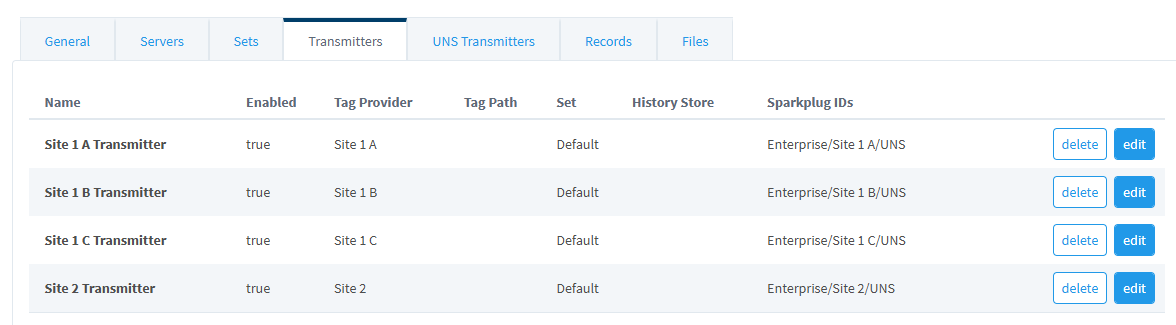
In the example below we have four tag providers simulating four Edges - Site 1A, Site 1B, Site 1C and Site 2.
For each Transmitter configuration we have set the Sparkplug IDs to use the the message topic allowing the tag folder hierarchy at the Edge to form the metric name.
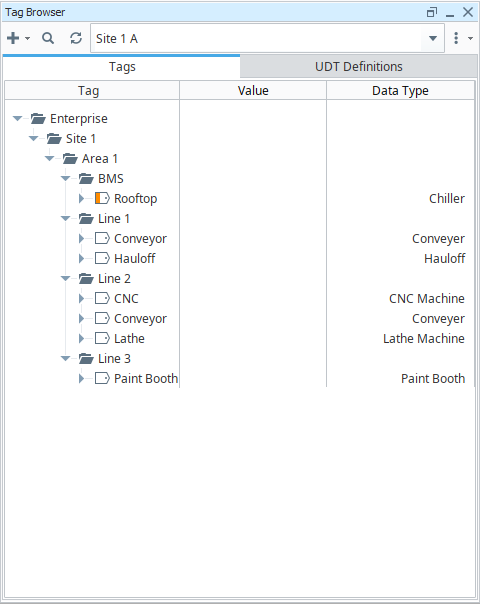
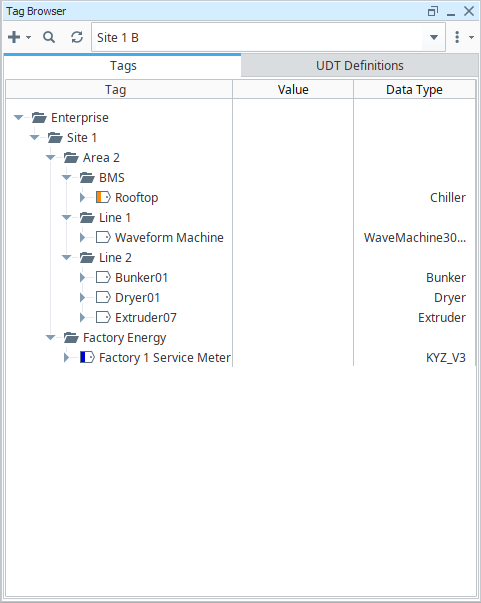
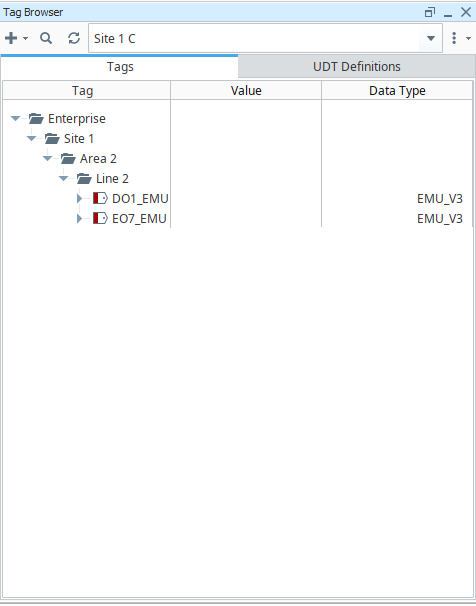
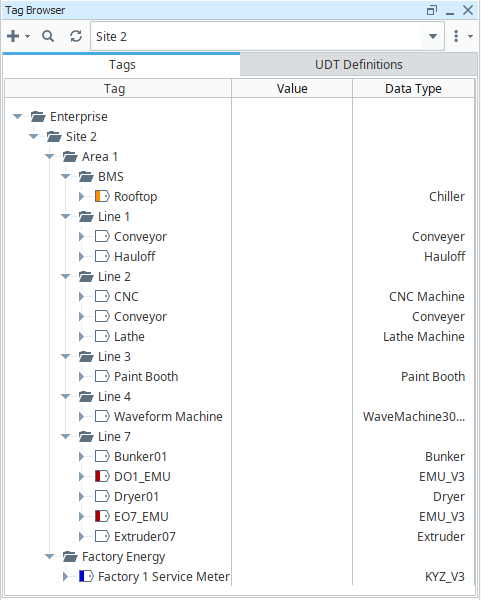
Messages published from the each edge node will now contain metric names which are the full folder hierarchy at the Edge
For example:
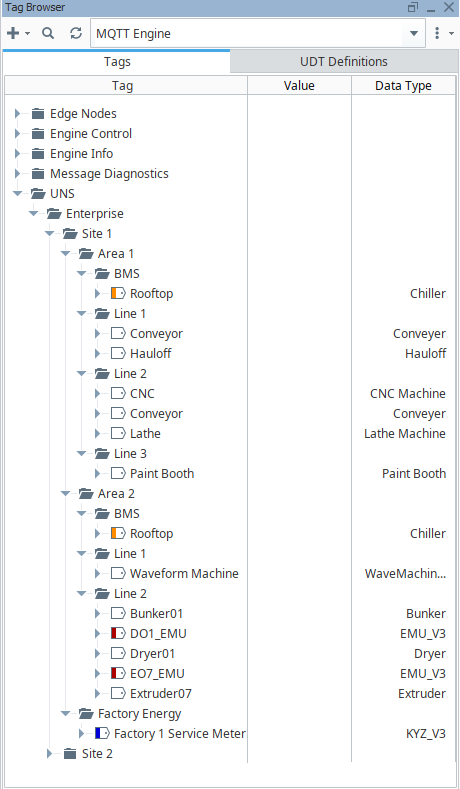
At Engine, these tags published from Edge Nodes Site 1 A, Site 1 B and Site 1 C are then concatenated under the single UNS tag path of UNS> Enterprise > Site 1