| Warning |
|---|
The UNS Transmitter is available in the nightly module build. The nightly module versions are always based on the last official release plus all features and bug fixes that have been made on top of the last official release but do not undergo the full suite of testing and should generally not be used in production environments. There are known issues with the UNS Transmitter and it is a work in progress until official release |
UNS Basics
Review the Inductive Automation article UNS: Unified Namespace for a comprehensive overview of what a UNS is and how it works.
Sparkplug Basics
Sparkplug defines a standard format for MQTT message topic paths of:
spBv1.0/group_id/Message Type/edge_node_id/device_id
Sparkplug defines a standard format for MQTT message payloads of:
| Code Block |
|---|
{
  "timestamp": <timestamp>,
  "metrics": [{
    "name": <metric_name>,
    "alias": <alias>,
    "timestamp": <timestamp>,
    "dataType": <datatype>,
    "value": <value>
  }],
  "seq": <sequence_number>
} |
where the ‘name’ of a metric can be hierarchical to build out proper folder structures for applications consuming the metric values.
For example, a simple Sparkplug™ B payload with a two metrics can be represented in JSON as follows:
| Code Block |
|---|
{
  "timestamp": 1486144502122,
  "metrics": [{
    "name": "Metric1",
    "alias": 1,
    "timestamp": 1479123452194,
    "dataType": "String",
    "value": "Test"
  },
  {
    "name": "Metric Level 1/Metric Level 2/Metric2",
    "alias": 2,
    "timestamp": 1479123452056,
    "dataType": "String",
    "value": "Test"
  }],
  "seq": 2
} |
| Tip |
|---|
|
| Using the hierarchical functionality of the metric name, in conjunction with the group_id, edge_node_id and device_id already defined in the Topic Namespace, allows consuming Sparkplug applications to organize metrics in the same hierarchical fashion to construct the Unified NameSpace whilst taking advantage of the benefits afforded by using Sparkplug. |
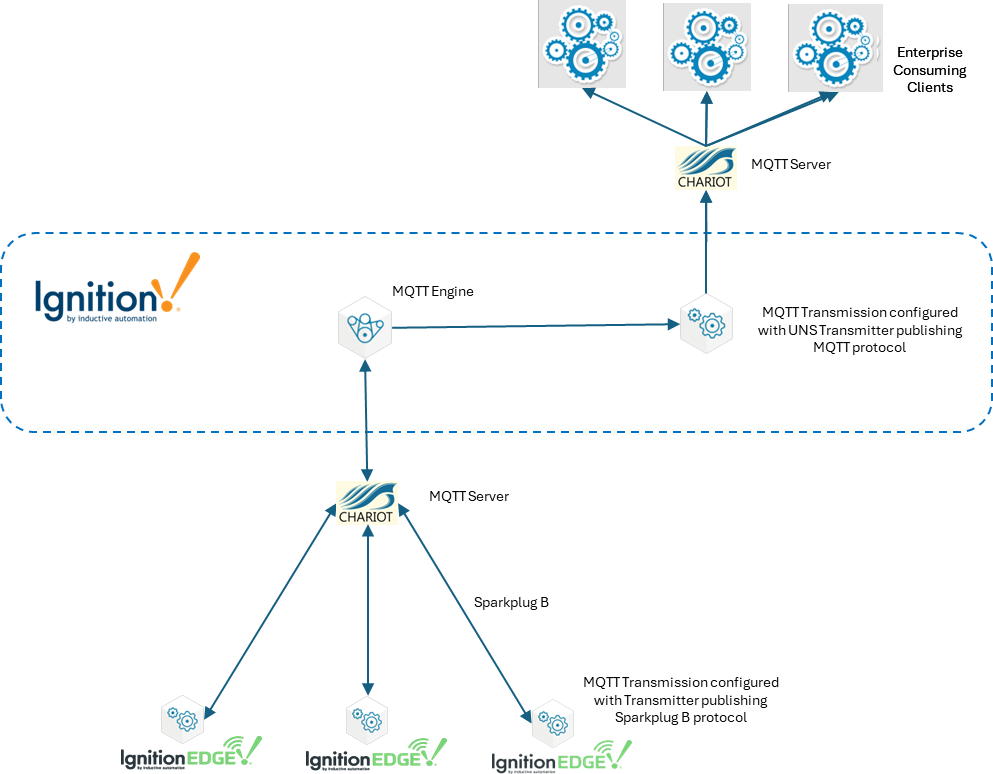
UNS Architecture
| Note |
|---|
The directional arrows in the image represent data flow. Data can be published from the UNS Transmitter to Enterprise Consuming Clients but the UNS Transmitter MQTT Client will have no subscriptions |
MQTT Engine
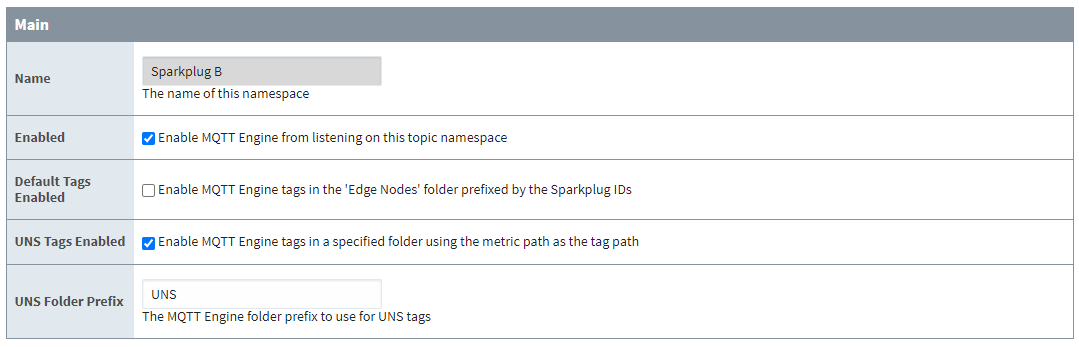
From release 4.0.23, MQTT Engine now has the option to consume incoming Sparkplug messages and organize metrics in the same hierarchical fashion to construct the Unified NameSpace.
Configuration is set in the Sparkplug B namespace under MQTT Engine > Namespaces > Sparkplug B > Default > General as shown below:
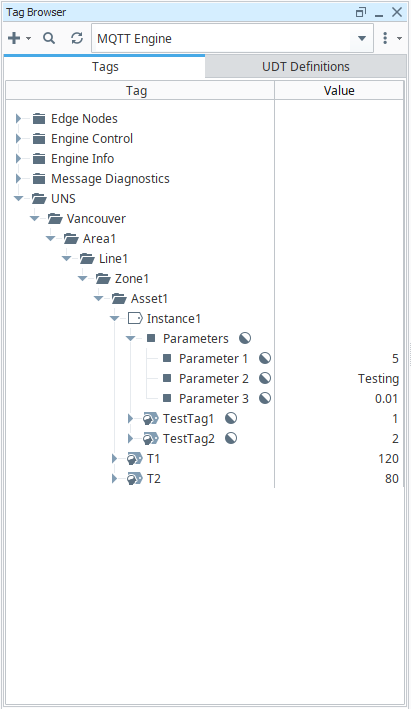
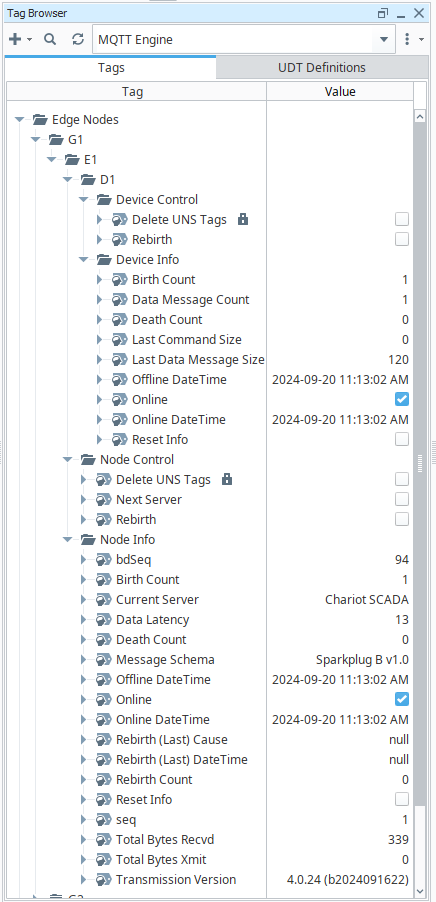
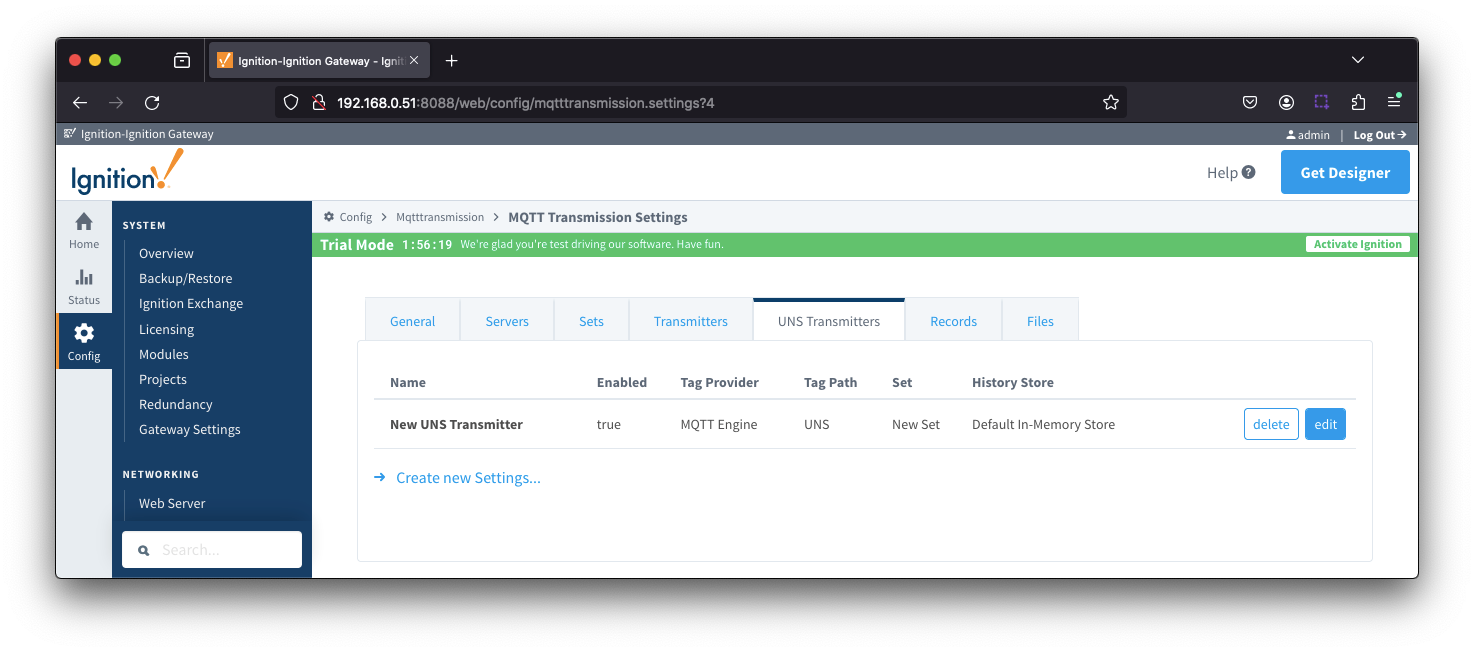
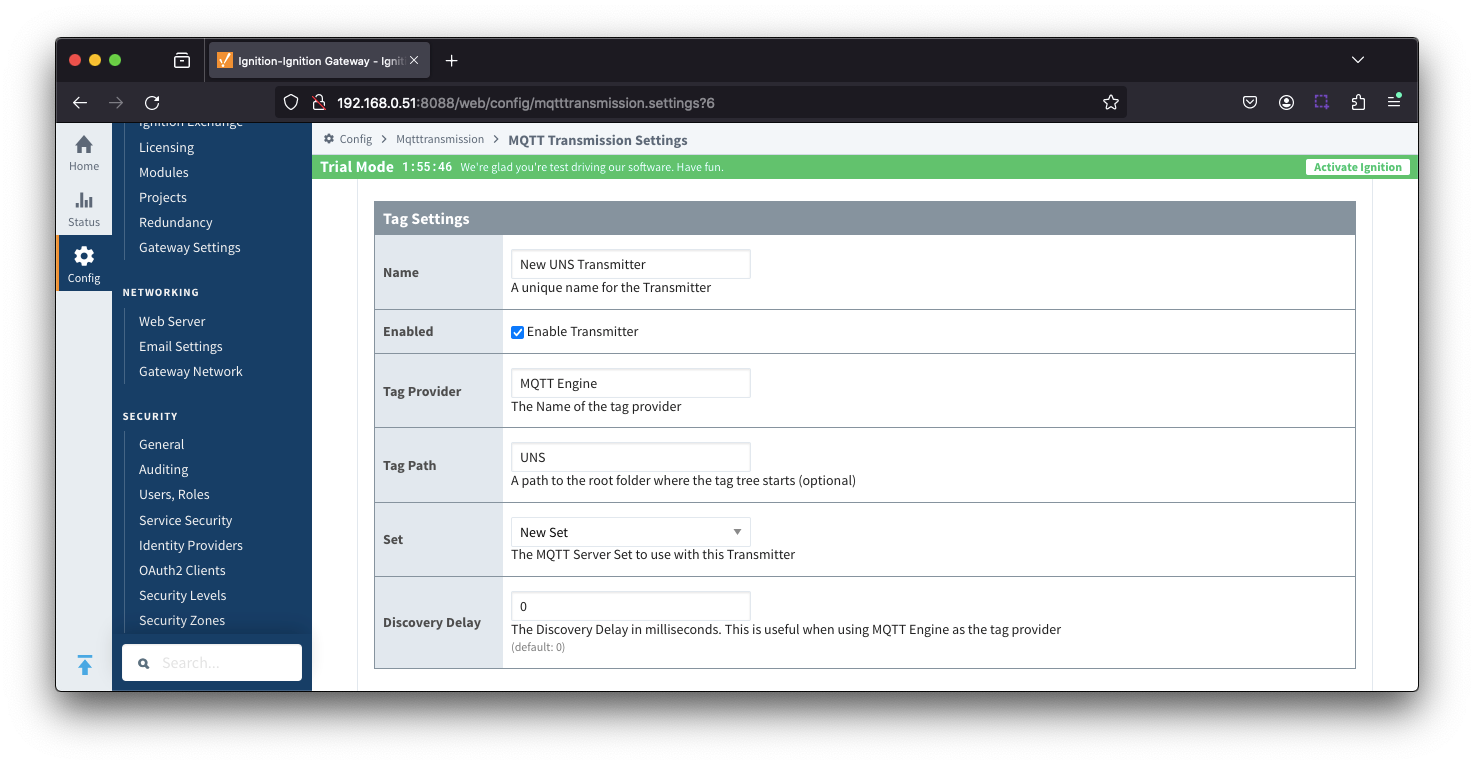
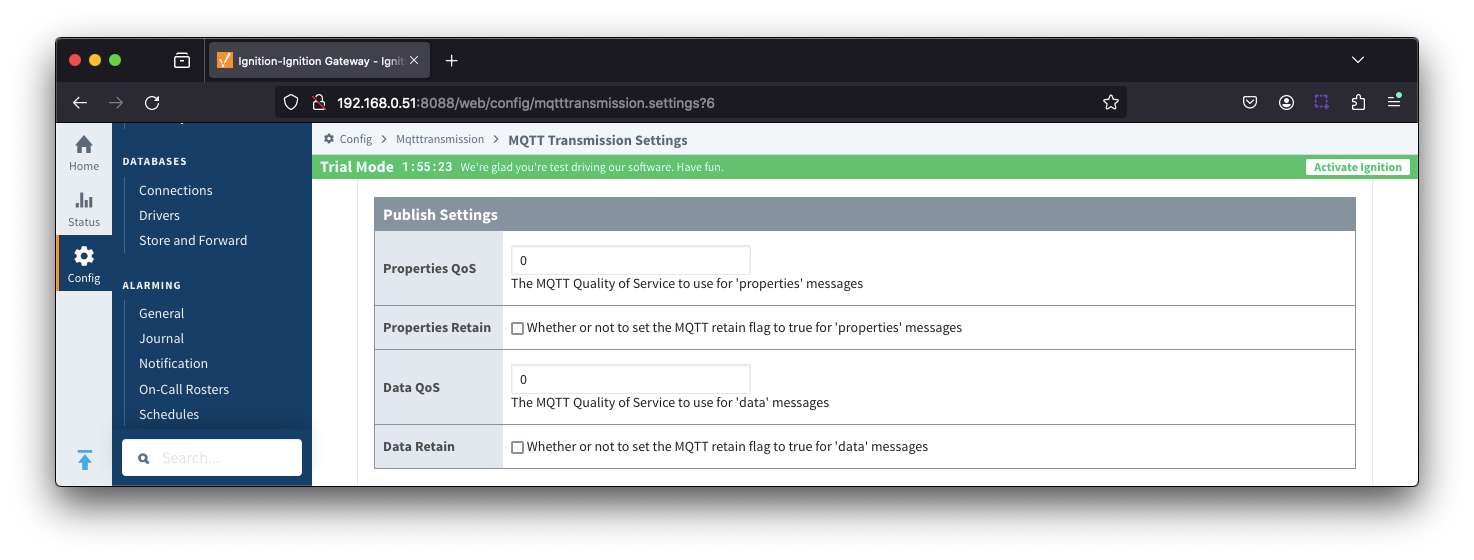
Let's take a look at a an example of how a UNS can be created at MQTT Engine from Edge Node tags published by MQTT Transmission.
| Tip |
|---|
|
| Review the MQTT Transmission Transmitters and Tag Trees to gain an understanding of how MQTT Transmission Transmitter configurations interact with Ignition tag trees to publish Sparkplug messages and the immense flexibility that can be realized. |
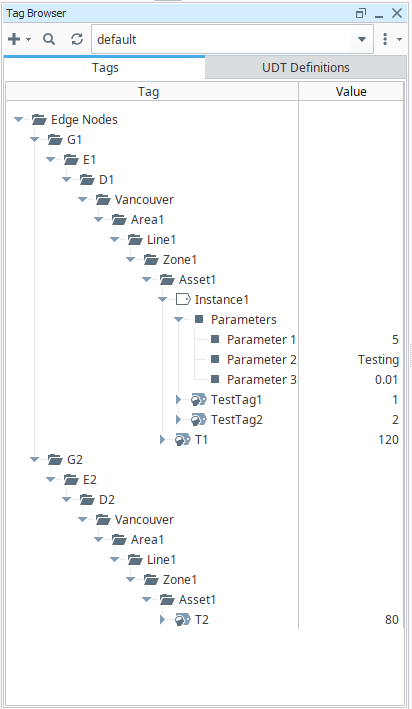
We have configured an MQTT Transmission Transmitter to use the Ignition tag tree in the default tag provider at the Edge to construct the Sparkplug Device Descriptor (group_id, edge_id and device_id) starting at the folder level below Edge Nodes.
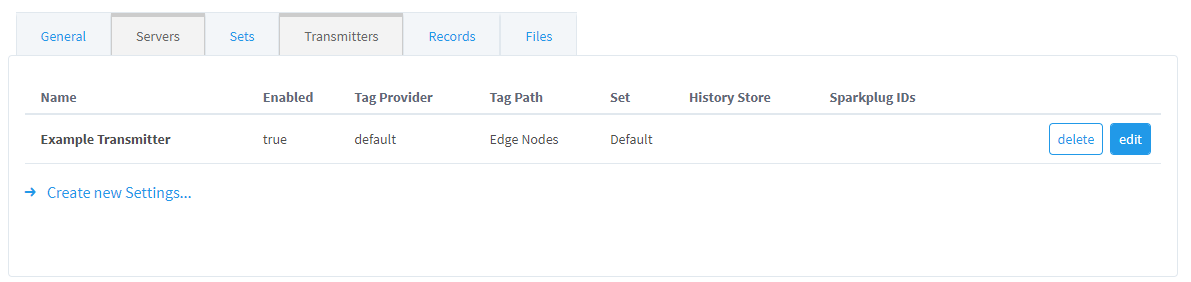
For the Ignition tag tree below, the topic and payload for a change to tag T1 will be:
Topic: spBv1.0/G1/DDATA/E1/D1
SparkplugBPayload: [timestamp=1726851053618, metrics=[Metric [name=Vancouver/Area1/Line1/Zone1/Asset1/T1, alias=null, timestamp=1726851052615, dataType=Int32, isHistorical=null, isTransient=null, metaData=null, properties=PropertySet [propertyMap={}], value=10, isNull=false]], seq=3, uuid=null, body=null]
At MQTT Engine, the metric name is parsed and the tag structure created under the configured UNS folder name.
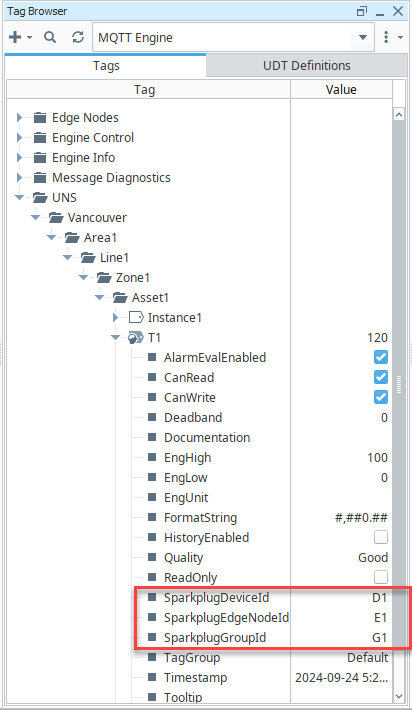
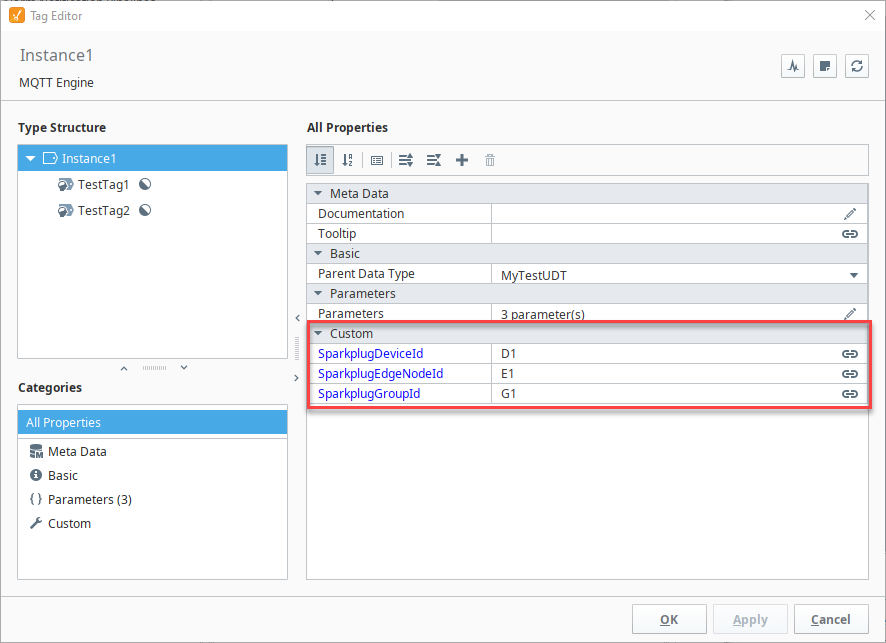
The tag has three additional properties which identify the Sparkplug Descriptor associated with this tag:
- SparkplugGroupId
- SparkplugEdgeNodeId
- SparkplugDeviceId