...
Once it is launched, you should see something similar to what is shown below. Note the Tag Browser has been expanded and the automatically created example tags have been highlighted.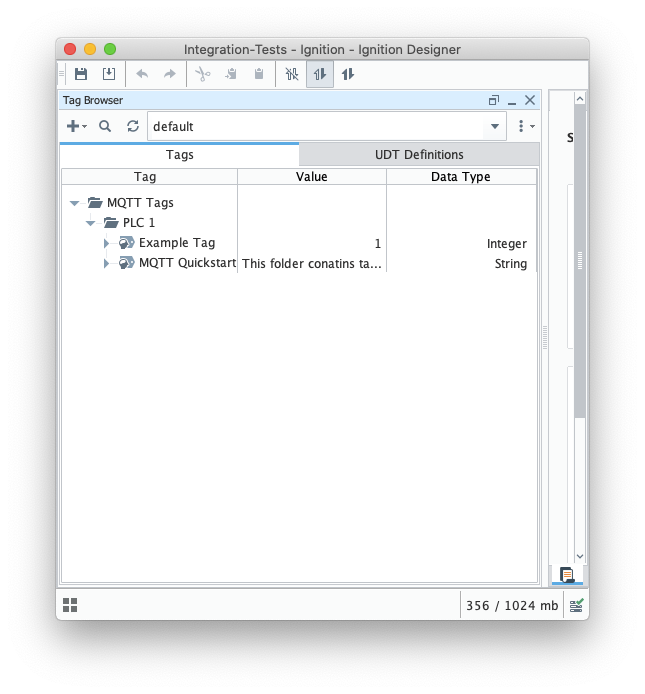 Image Added
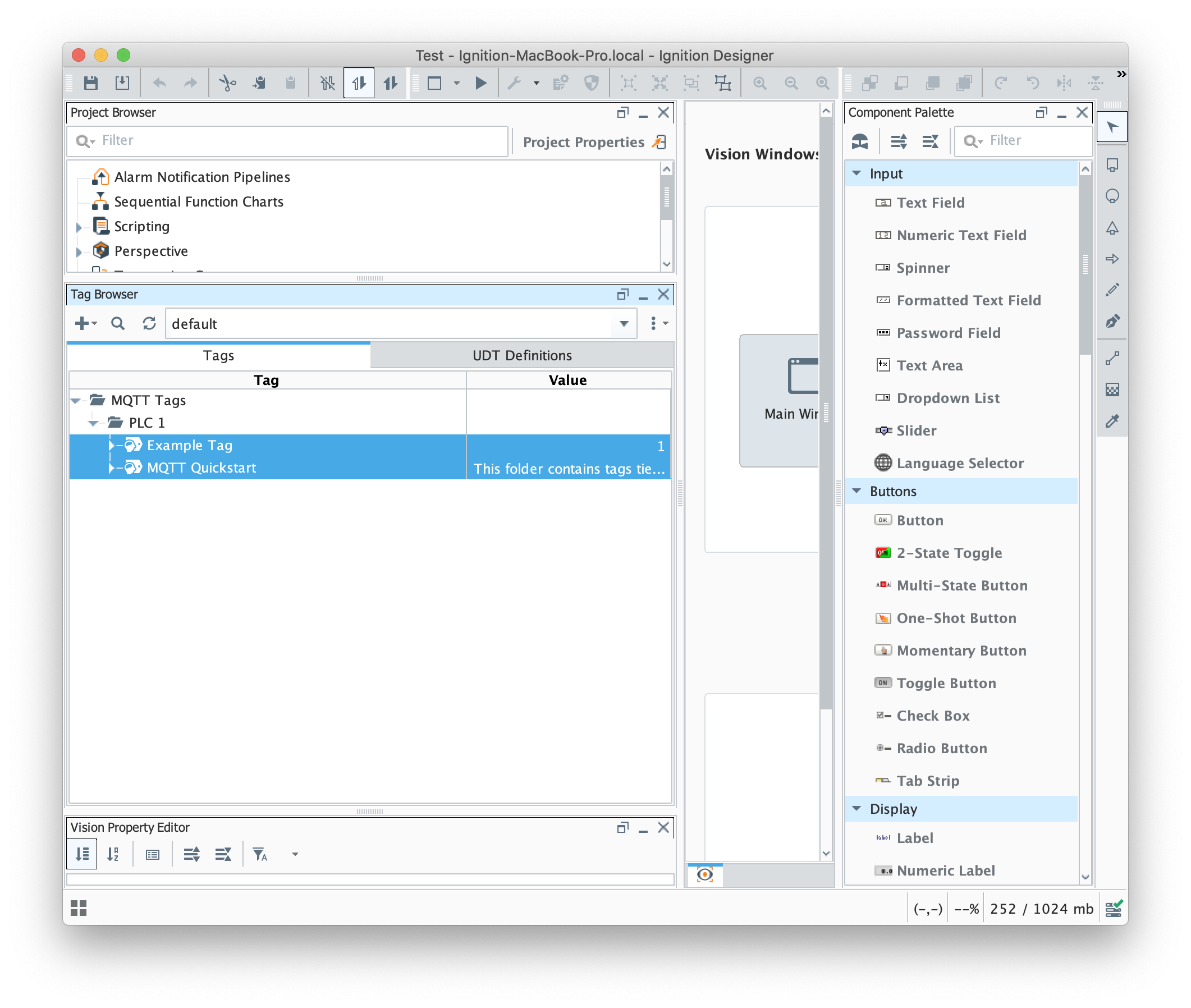 Image Removed
Begin by deleting these two tags (Example Tag and MQTT Quickstart). Then click the 'UDT Definitions' tab as shown below. We will use this view import these tags IBSNOW_Azure_Quickstart_tags.json to create a very simple UDT definitionDefinition and instance.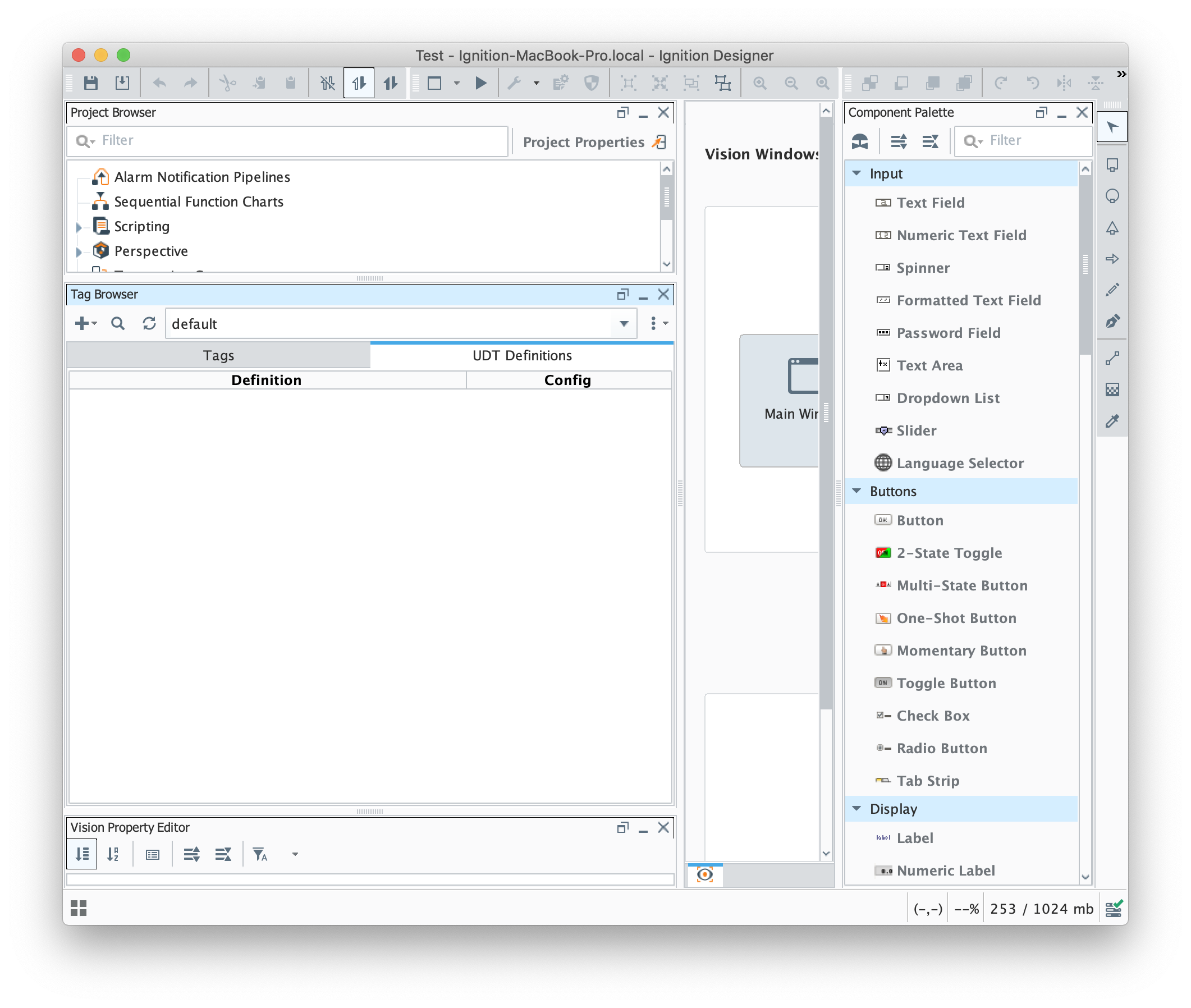 Image Removed
Now, click the '+' icon in the upper left corner of the tag browser as shown below and select 'New Data Type'
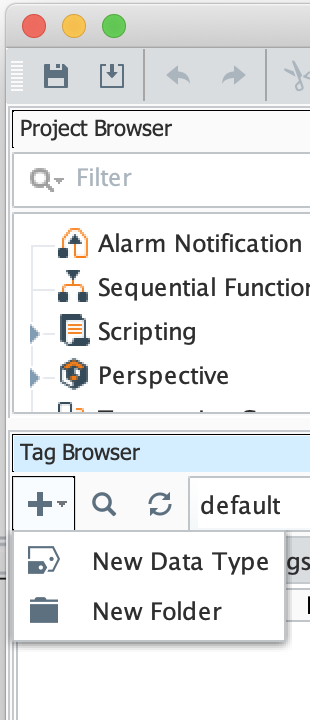 Image Removed
This will open the following dialog box.
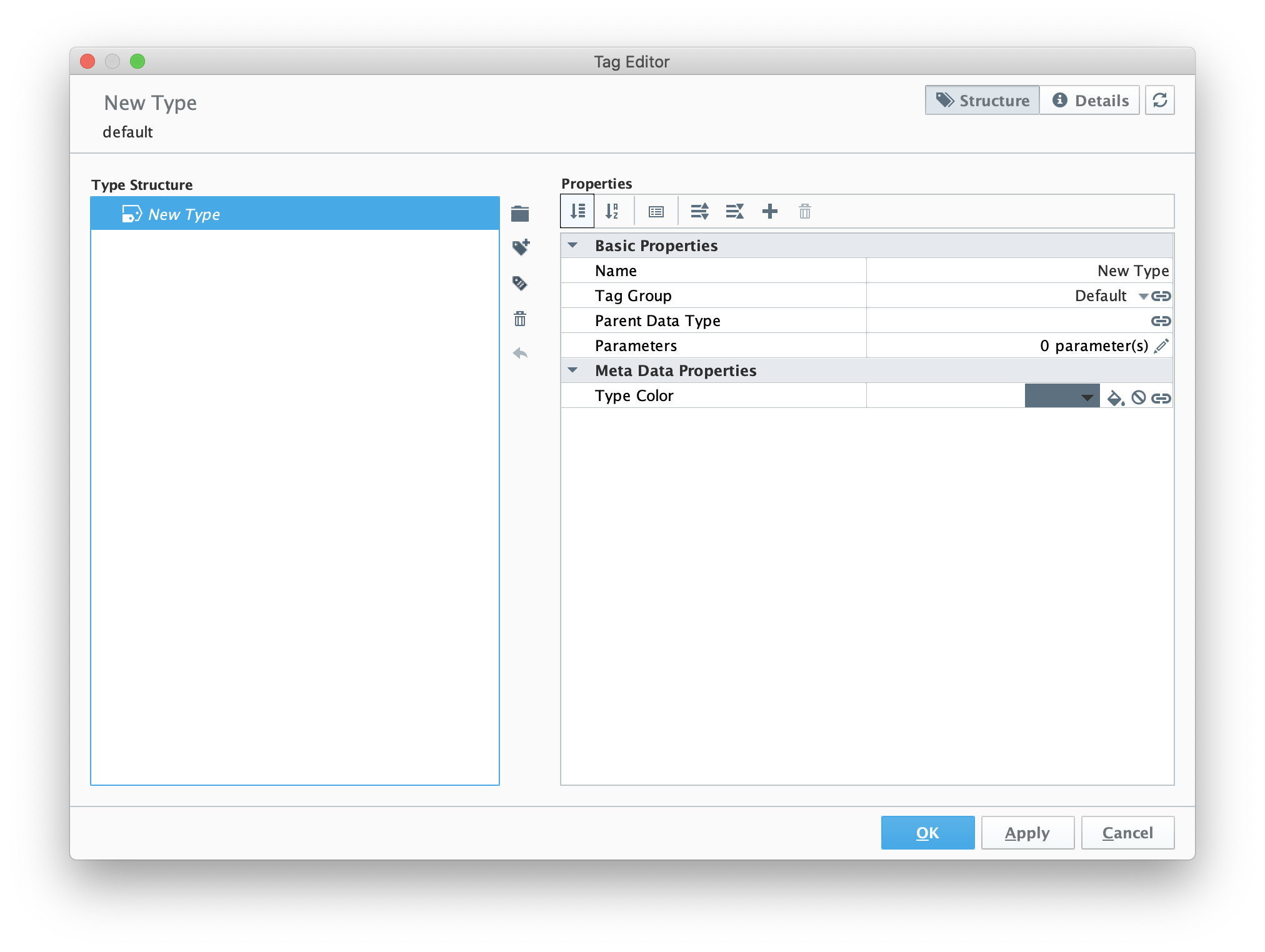 Image Removed
Change the name of the tag to Motor as shown below. Also, note the highlighted 'new member tag' icon in the middle of the dialog. We'll use this to create some member tags.
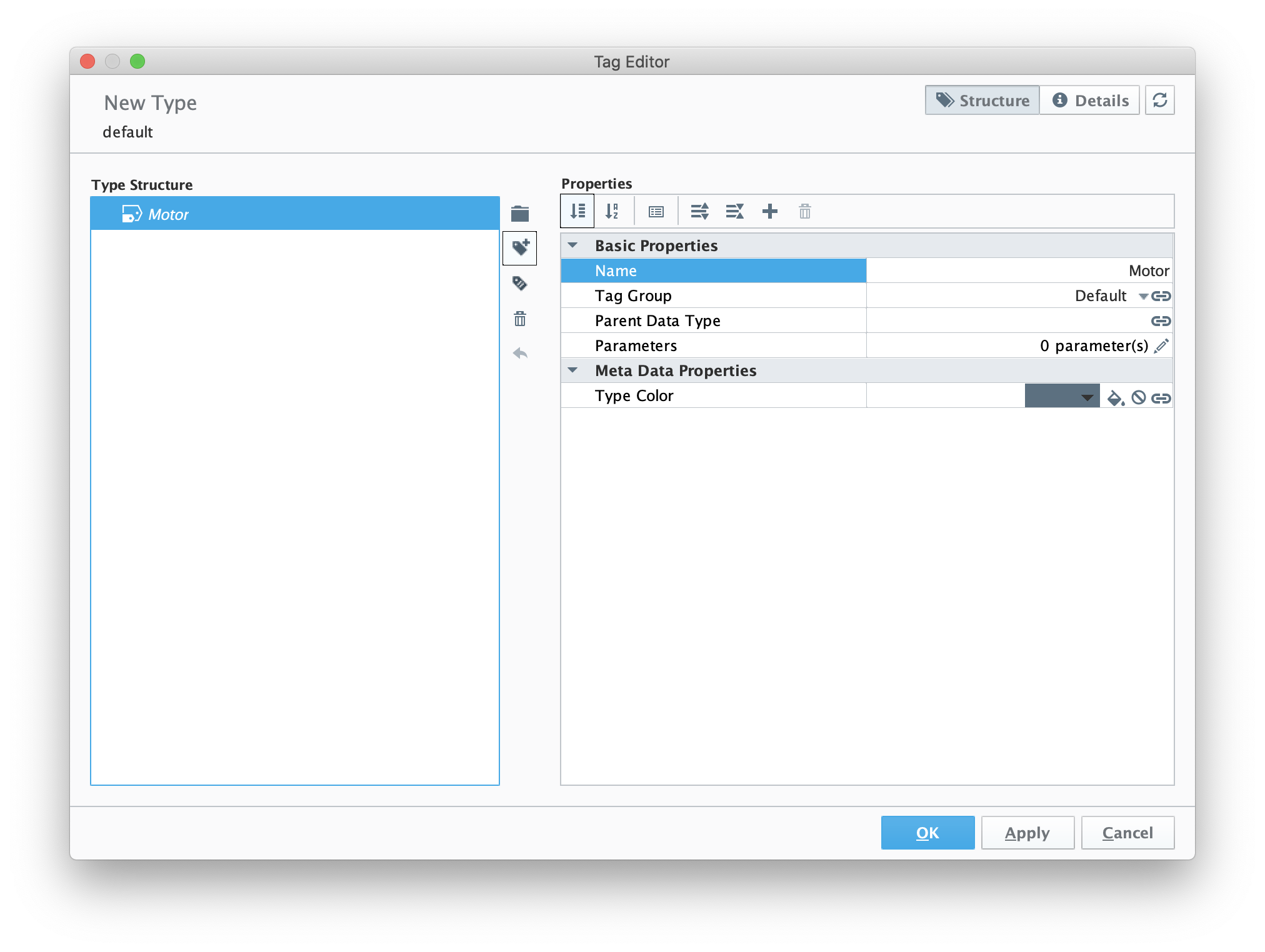 Image Removed
Now use the 'new member tag' button to create a new 'memory tag' as shown below.
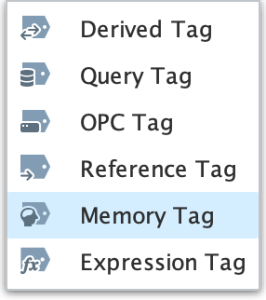 Image Removed
Then, set the following parameters for the new memory tag.
- Name
- Date Type
- Engineering Units
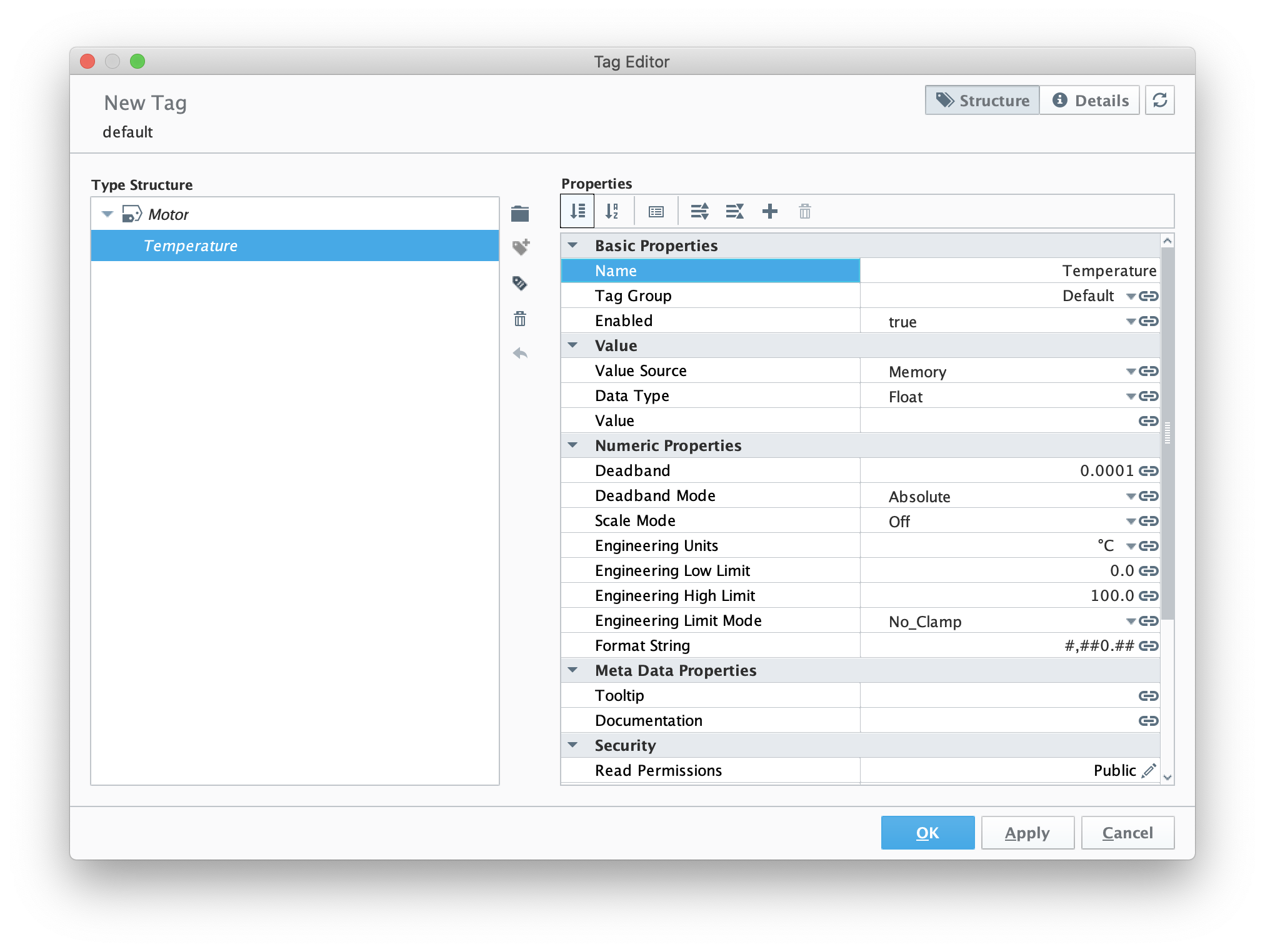 Image Removed
Now create two additional member tags with the following configuration.
- Amps
- Memory tag
- Data Type = Integer
- RPMs
- Memory tag
- Data Type = Integer
When complete, the UDT definition should look as follows.
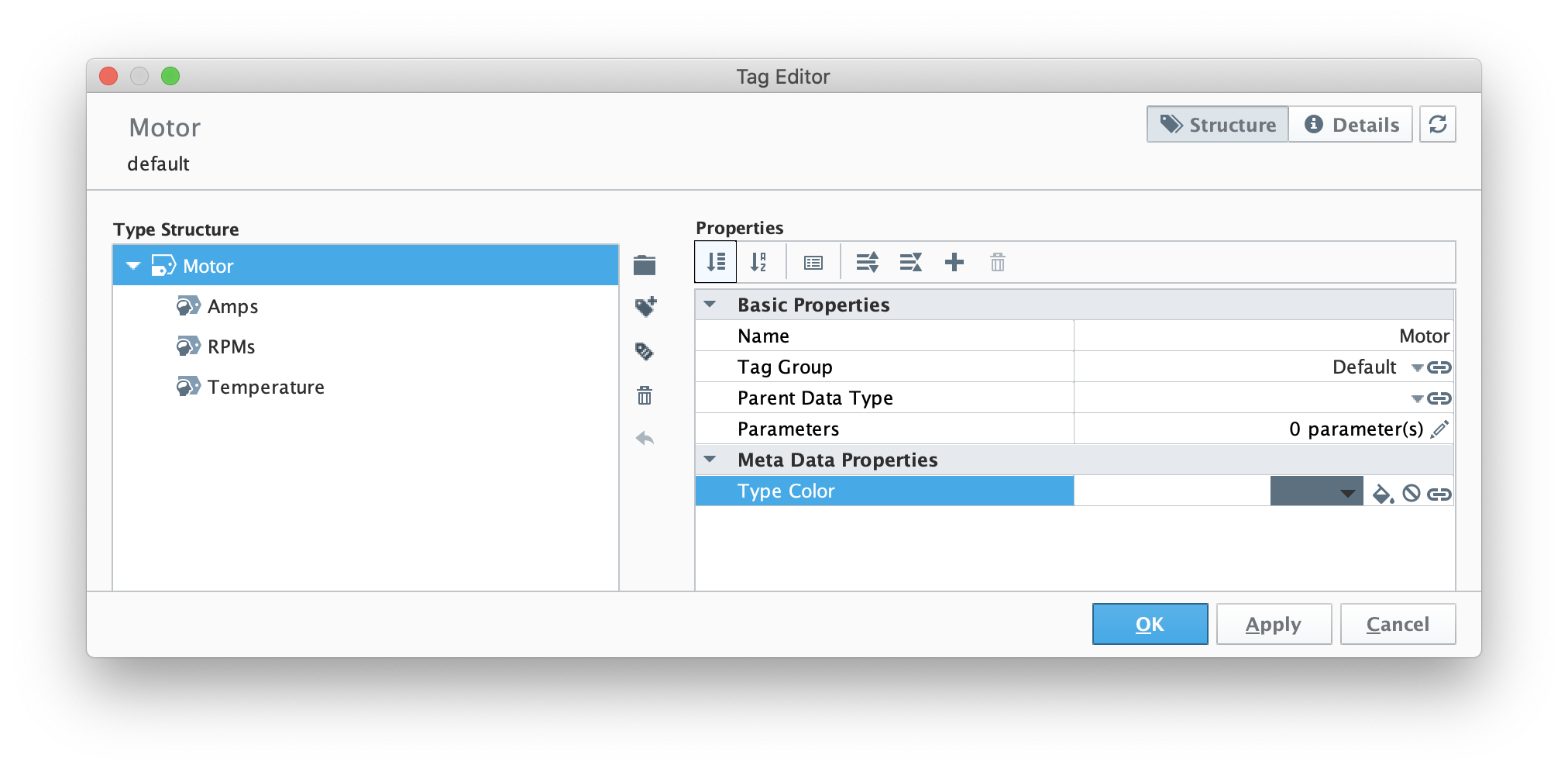 Image Removed
Now switch back to the 'Tags' tab of the Tag Browser. Right click on the 'PLC 1' folder and select 'New Tag → Data Type Instance → Motor' as shown below.
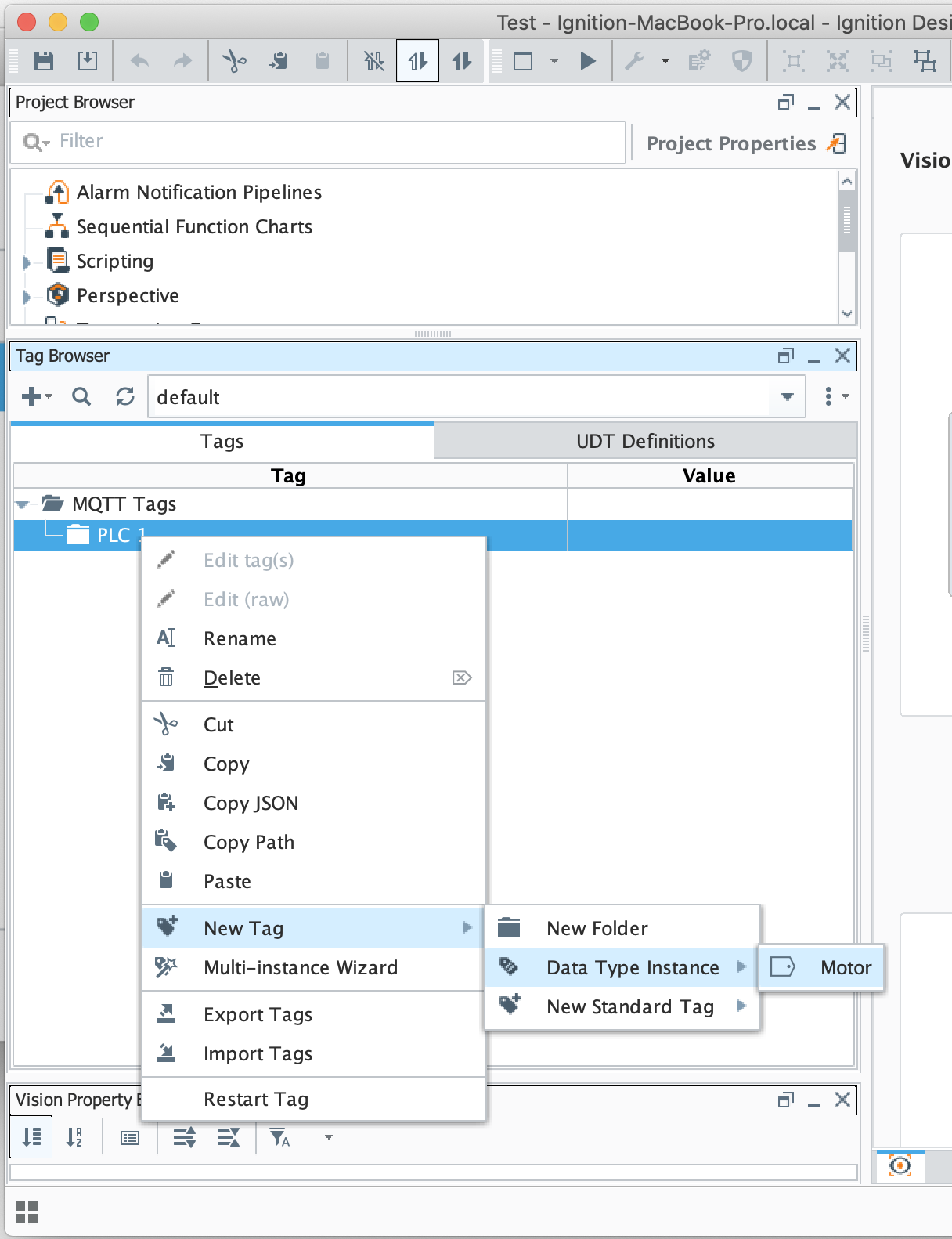 Image Removed
Now set the name to 'My Motor' as shown below and click OK.
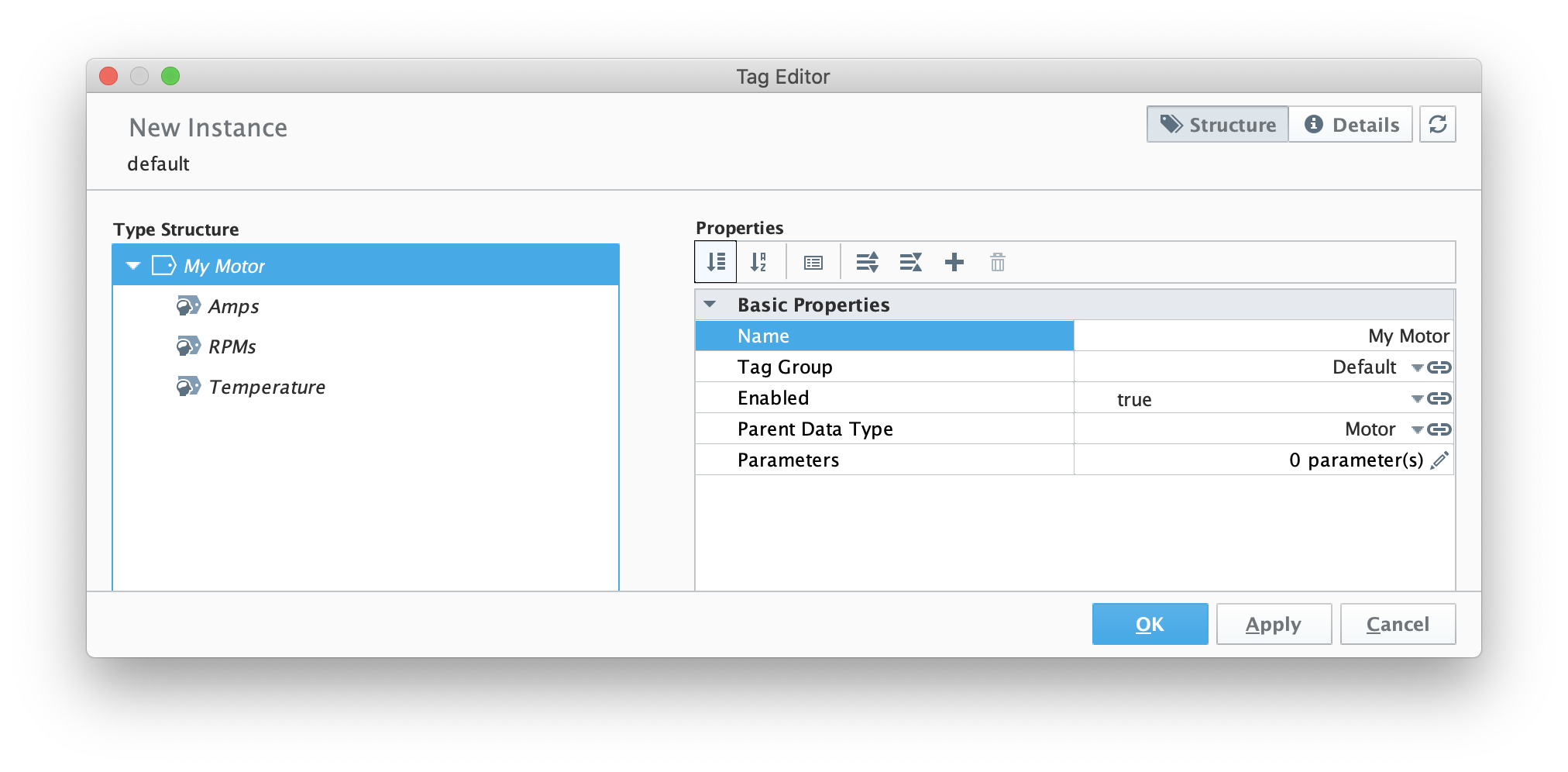 Image Removed
Now, set some values under the instance as shown below.
...
The tag browser will now show the following:
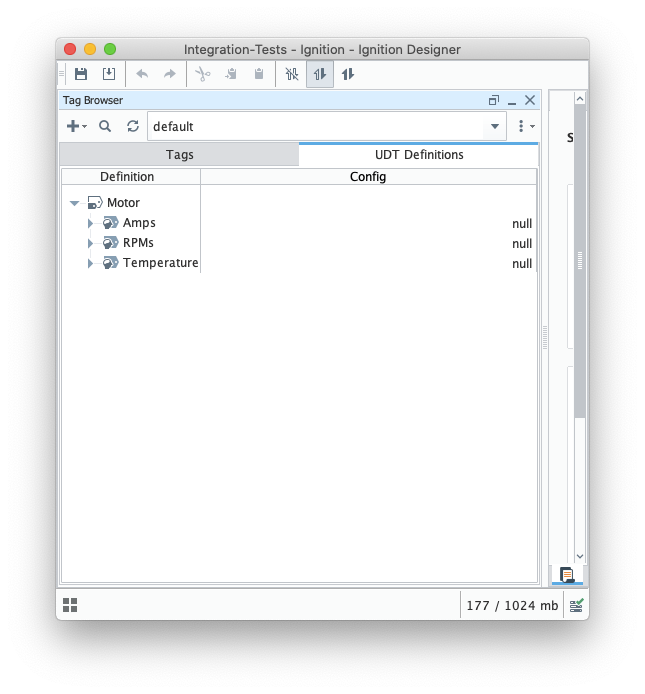 Image Added
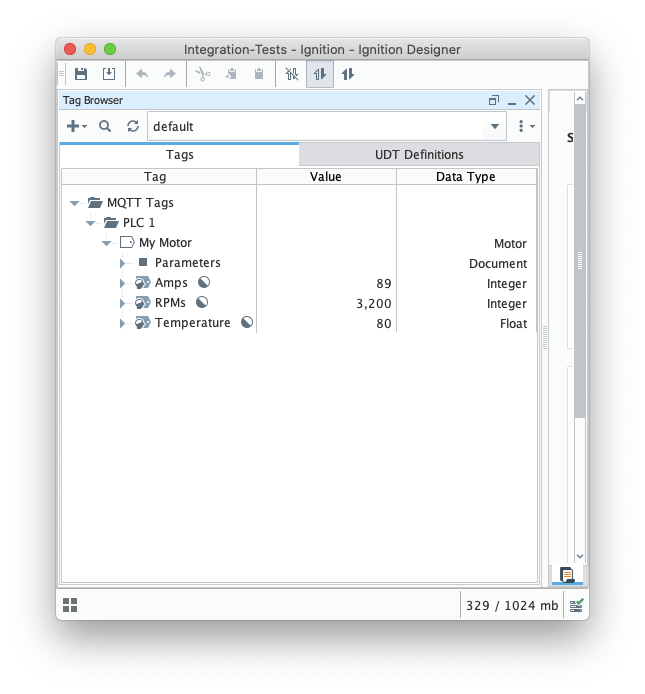 Image Added
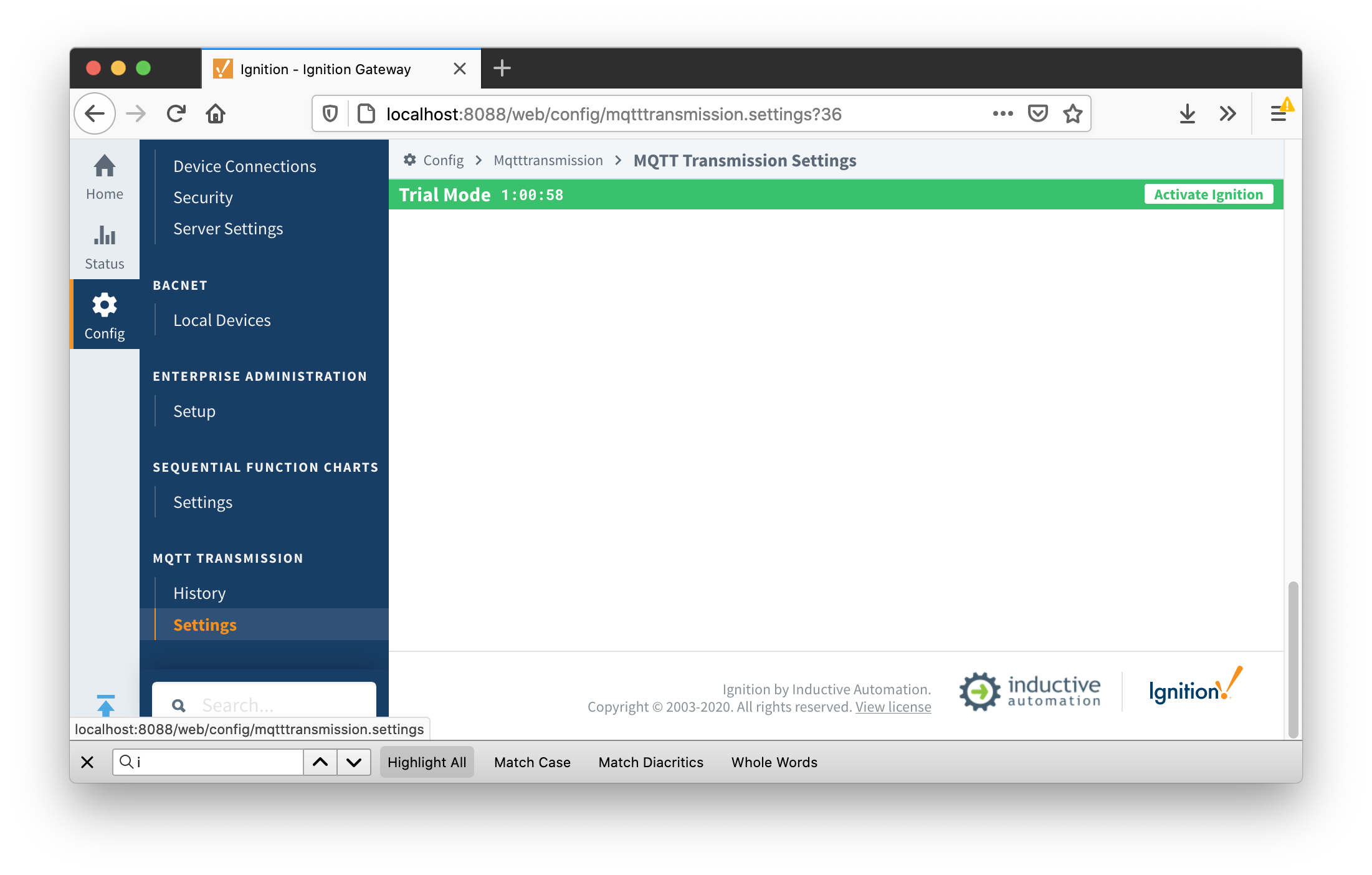
At this point, our tags are configured. A UDT definition will map to a model in Snowflake and UDT instances in Ignition will map to Snowflake. But, before this will happen we need to point MQTT Transmission to the Chariot MQTT Server. To do so, browse back to the Ignition Gateway Web UI and select MQTT Transmission → Settings from the left navigation panel as shown below.
Now select the 'Transmitters' tab as shown below.
...