...
This tutorial shows how to configure the MQTT modules to manually publish and process files.
...
This allows the three modules to automatically connect and provide a starting base for the tutorial.
Step 2: Configure Primary Host on MQTT Engine and MQTT Transmission
Navigate to the MQTT Engine > Settings in the left side of the Ignition Gateway UI and select the General tab.
Set Primary Host Enabled and add a Primary Host ID as shown below:
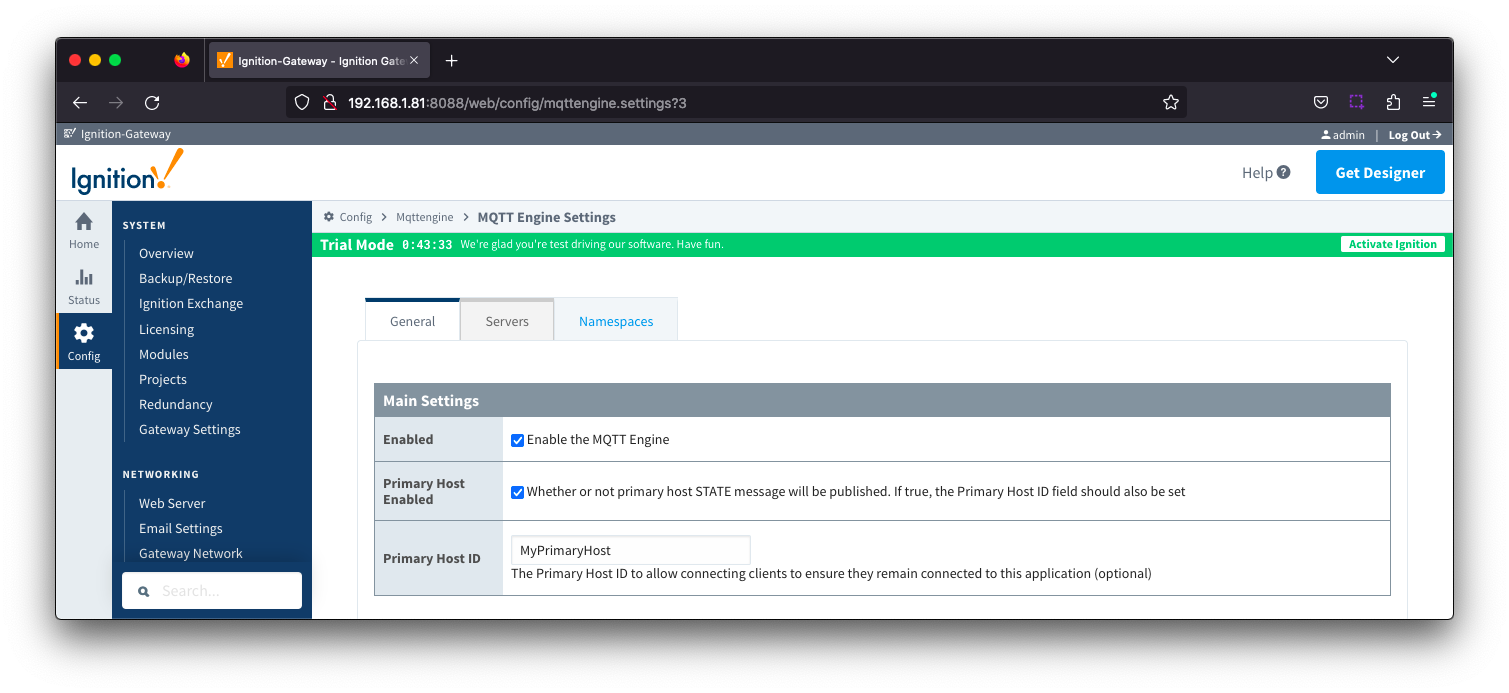 Image Added
Navigate to the MQTT Transmission > Settings in the side of the Ignition Gateway UI and select the Sets tab.
Edit the Default Set and add a Primary Host ID as shown below:
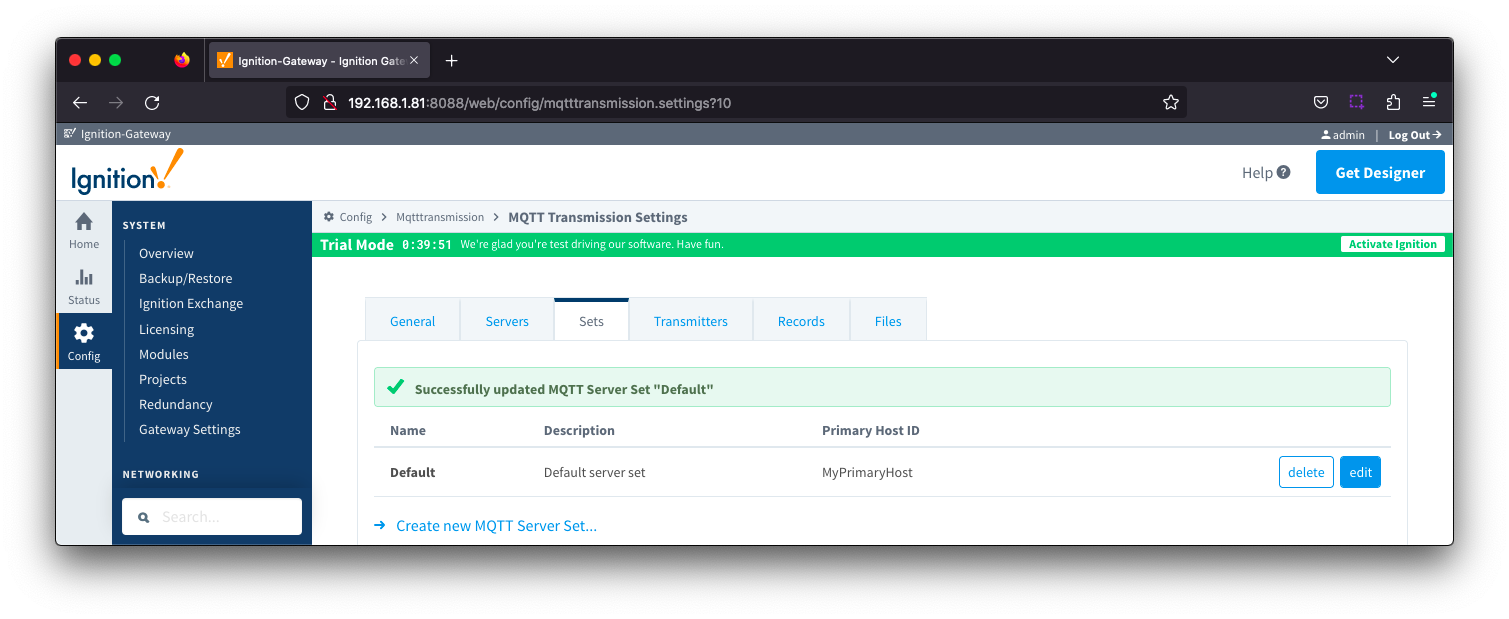 Image Added
Step 3: Config MQTT Engine File Handling
Now we can configure the MQTT Engine module to process the published files.
...
When complete, it should look similar to the following. Save the changes after confirming.
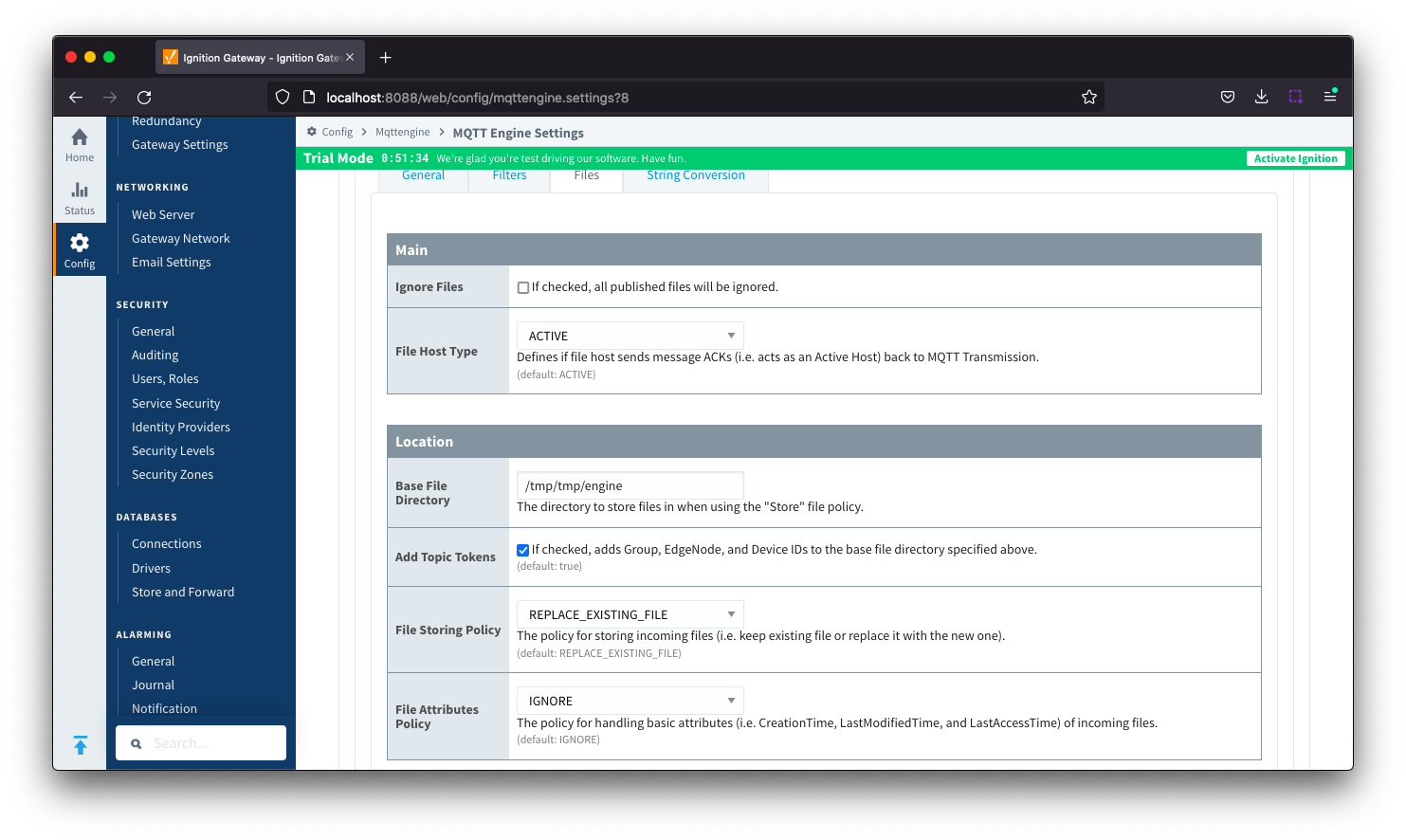
Step
...
4: Configure MQTT Transmission to publish files
Now we can configure the MQTT Transmission module to publish files using a configured Transmitter. Navigate to the MQTT Transmission > Settings in the left side bar of the Ignition Gateway UI and select the Transmitters tab.
...
After the configuration is saved, it should look similar to below:
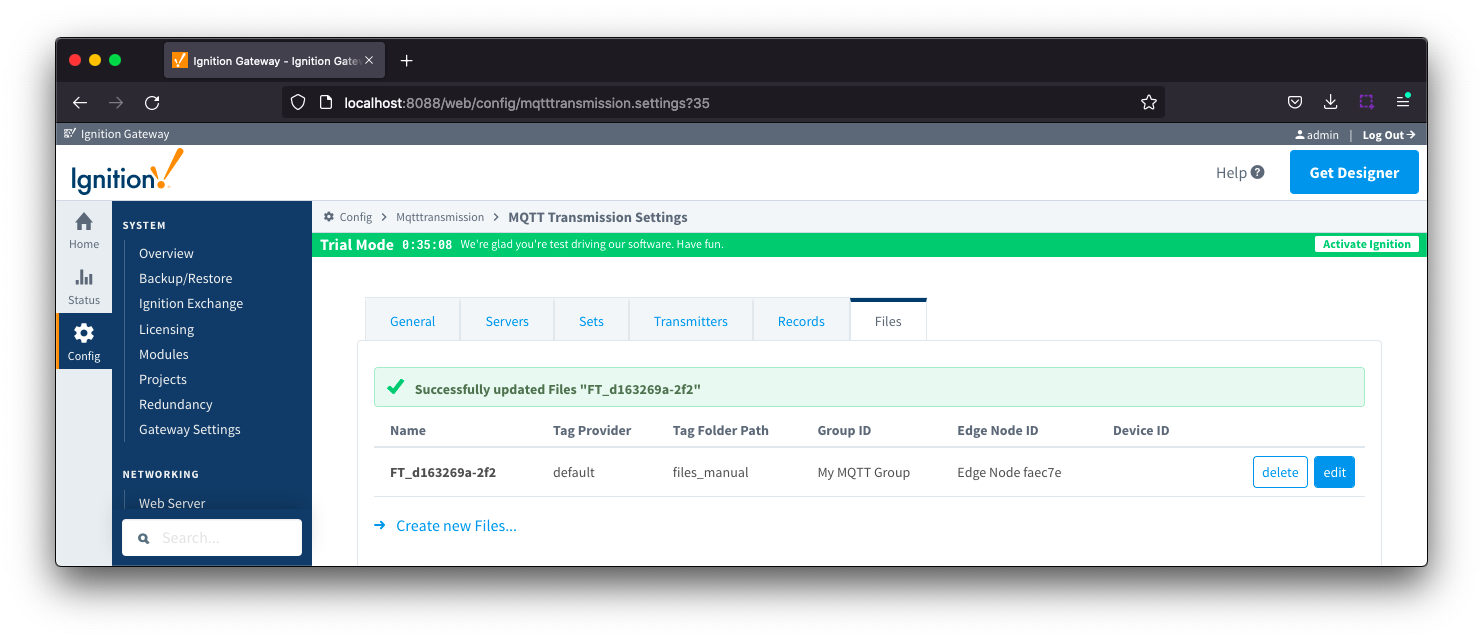
Step
...
5: Publish Files
At this point, everything should be configured to send files from MQTT Transmission to MQTT Engine. Open Ignition Designer on the system running MQTT Transmission. You should see the control and information tags created in the specified tag provider and folder as shown below:
...
| Note |
|---|
| With the File Auto_Publish disabled, the files will be left on the originating filesystem after a successful publish and will need to be removed manually |
Step
...
6: Viewing the messages in the Ignition logs
The records published from MQTT Transmission can be be viewed in the Ignition Gateway logs by setting the com.cirruslink.mqtt.engine.gateway.sparkplug.SparkplugPayloadHandler logger to TRACE.
...